
In this lesson, we'll translate the data analysis into a story that you can package up and publish to your audience.
Home | Lesson 1 | Lesson 2 | Lesson 3 | Lesson 4 | Lesson 5
Potential Storylines from the Analyses
If you've followed along so far, we hope that you're both finding this interesting and learning how to apply the learnings to your own analyses and story-making. We've been leaving some breadcrumbs along the way, but let's dive into some of the key analytical takeaways that could make for an interesting story.
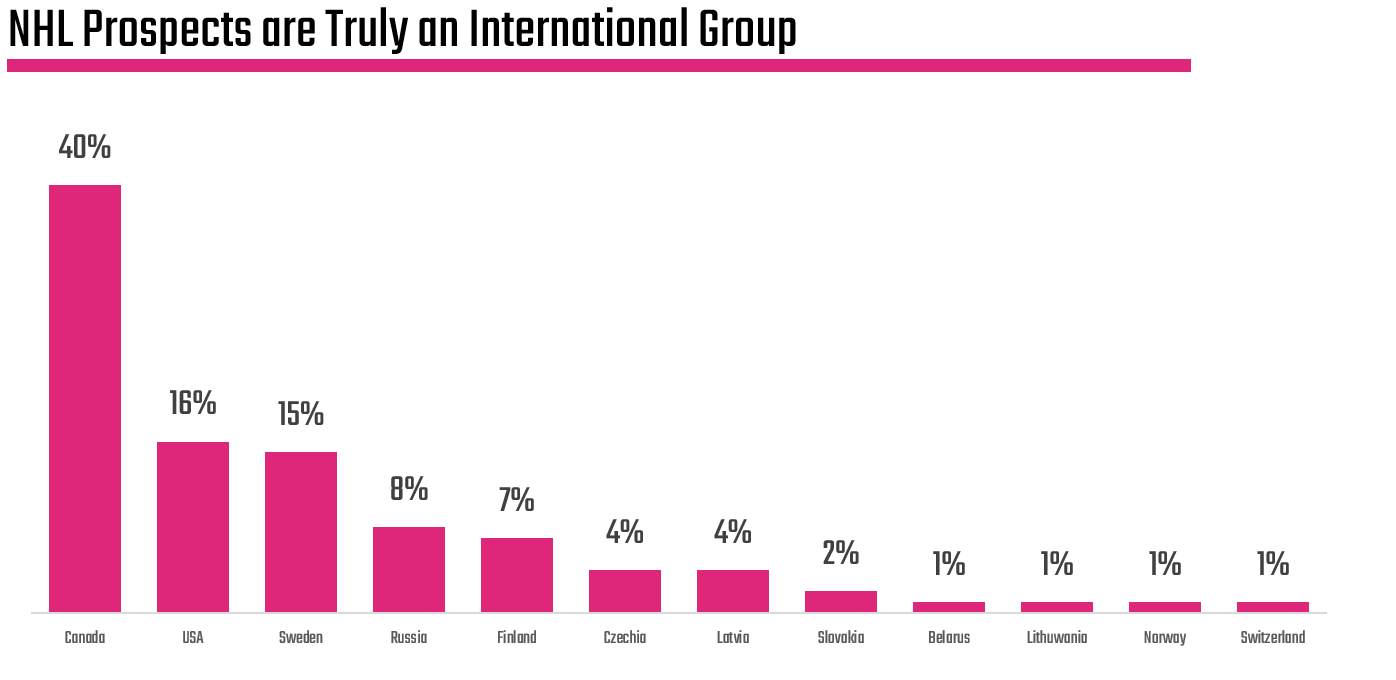
An initial theme is the international nature of the prospects.
As you can see from the below, out of the dataset we pulled from Elite Prospects, there is a diverse set of countries represented here. This translates into different development programs, different styles of play, ways of living and cultures, ice surfaces, quality and sizes, and much more.
It's actually a fascinating story that is often untold when it comes to what feeds the NHL – with many different potential angles. For example, the angle on the top 10 forwards could be what countries they represent and how their games are so different.
A second theme are the top 10 forwards, which directly answers our big question.
It's a comparison of the players themselves and maybe analyzing what teams most need the skills these prospects bring to the table.
Now, this story could be interesting, but it also depends on the audience.
For example, if you was an NHL Scout and was reporting back to my coaching staff on prospects, you'd likely have multiple dimensions around each player. For example, you'd have scoring across each of the major parts of their games along with anecdotes about those areas. However, there is serious money and strategy on the line with decisions stemming from such a report.
If this were a consumer-facing story, then perhaps you take the top three and have some core stats as differentiators. You could compare the forwards across point production, for example, and frame the story in a five-beat reel that goes something like the below:
- People have the NHL prospects all wrong
- 3rd ranked prospect
- 2nd ranked prospect
- 1st ranked prospect
- Can the top-ranked prospect remain out in front?
This could be a fun, edgy story that directly distills from your analysis.
But, we digress.
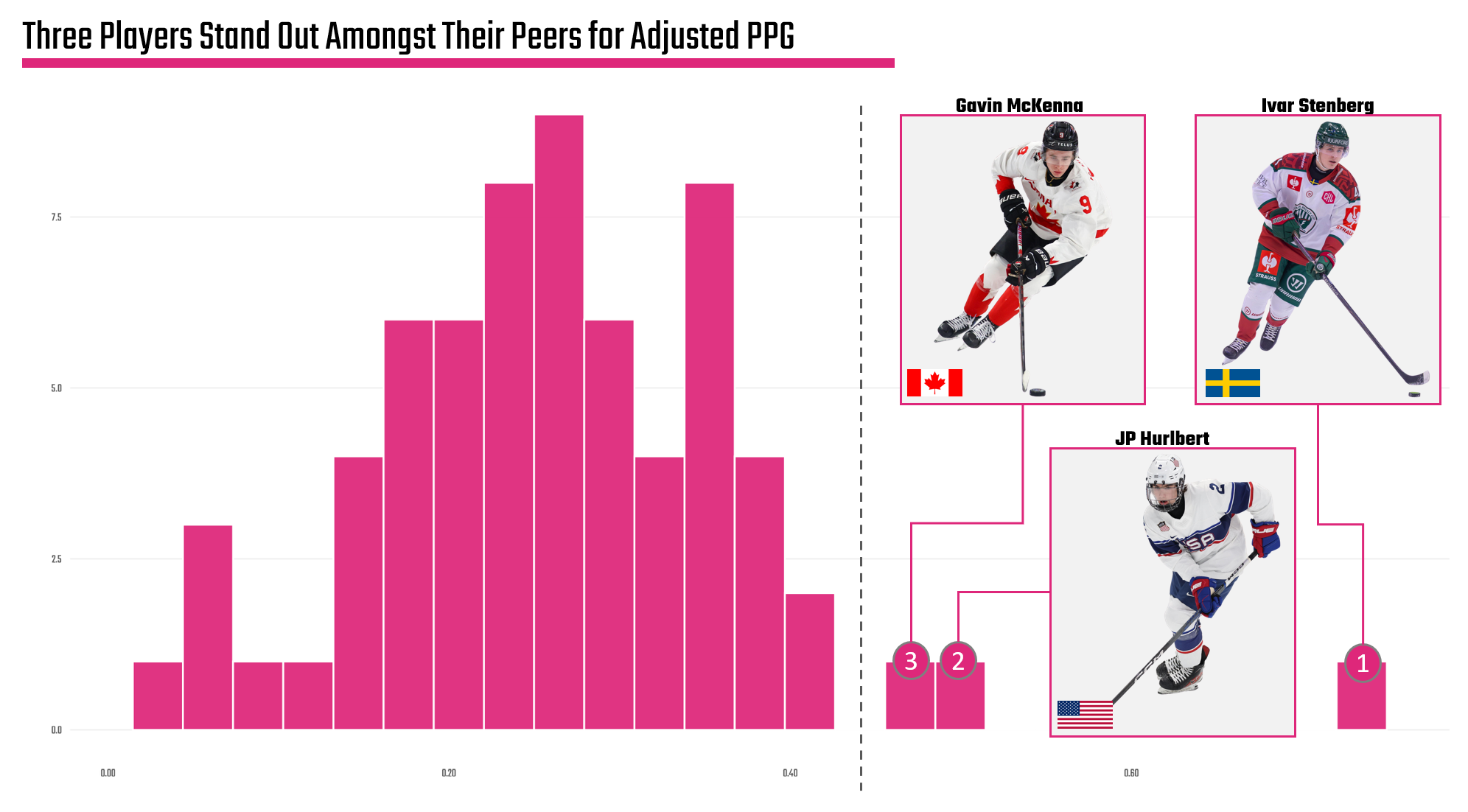
A third potential theme would be focusing on the outliers.
Honestly, this is where we would land. We'd do a treatment of the top 3 forwards as a 'tip of the hat', but quickly move to the outlier. Why? It's fun, more simple for an audience to engage with and frankly brings Sweden (who contribute 10% of the NHL's players) into a more prominent frame. We personally love the influence that other countries bring to the NHL, so there's a lot of potential for angles here – be it nationality, a surprise front-running prospect, or focus on passing game as key to the outlier.
So, where to from here?
At this point, we'll hand it back to you. Hopefully, you've followed along with this first living course module, have done your own analysis (maybe even curated a more recent snapshot of the data), and come to your own conclusions on stories for your audience.
So, the question is what story would you tell?
What Now?
So, huge congrats! You made it through the five lessons in the Sports, Data Science and Storytelling Living Course. We hope you learned something from this module.
But, the question is what now?
You should have enough of a grounding to take the lessons learned in this module and do your own analysis and sports story creation. Whether it's a story focusing on the NHL prospects or another sport, a lot of the underlying principles we covered here apply to other sports. For example, raw and calculated statistics ladder into categories and dimensions; players can be compared across those dimensions; you can separate athletes across statistical quartiles; and you can apply different machine learning techniques to let math help you out.
If you're curious how we took this analysis and make the story a reality, then head back to the main Module 1 page and check out the Published Story section. We've shared our story and what we did, and our challenge to you is do it better.
We've also noted some of the learnings and key takeaways from this module and our experience building our own version of the story.
When you do better, we all do better!
👉 Up Next? Check Out the Published Story