
How to Build, Publish and Monetize Your Data-Driven Stories
At a Glance
Why You Need a Framework
If you’re a solo creator or small media startup, you’ve probably felt overwhelmed trying to keep up and do everything. One day you’re scraping data, the next you’re designing visuals, and by Friday you’re posting content that may or may not convert. And it's not just about the tasks-to-be-done; it's also about the ramp on skills that are required to do those tasks.
When we first started out, we listened to all manner of expert and influencer and found that this was a fast track to getting burned out. We didn't know what to look for; we weren't sure what it meant to have a content strategy; and we certainly had little idea on how to convert content into a business.
However, having gone through a slew of projects and a couple of years of learning, we've now discovered some patterns and practices that are helping us work smarter. That’s why we built this framework — a repeatable, end-to-end system that takes a single idea and transforms it into a data-driven story that’s engaging, scalable, and monetizable.
It’s called the Storytelling Framework, and it includes the following steps (with example tools).
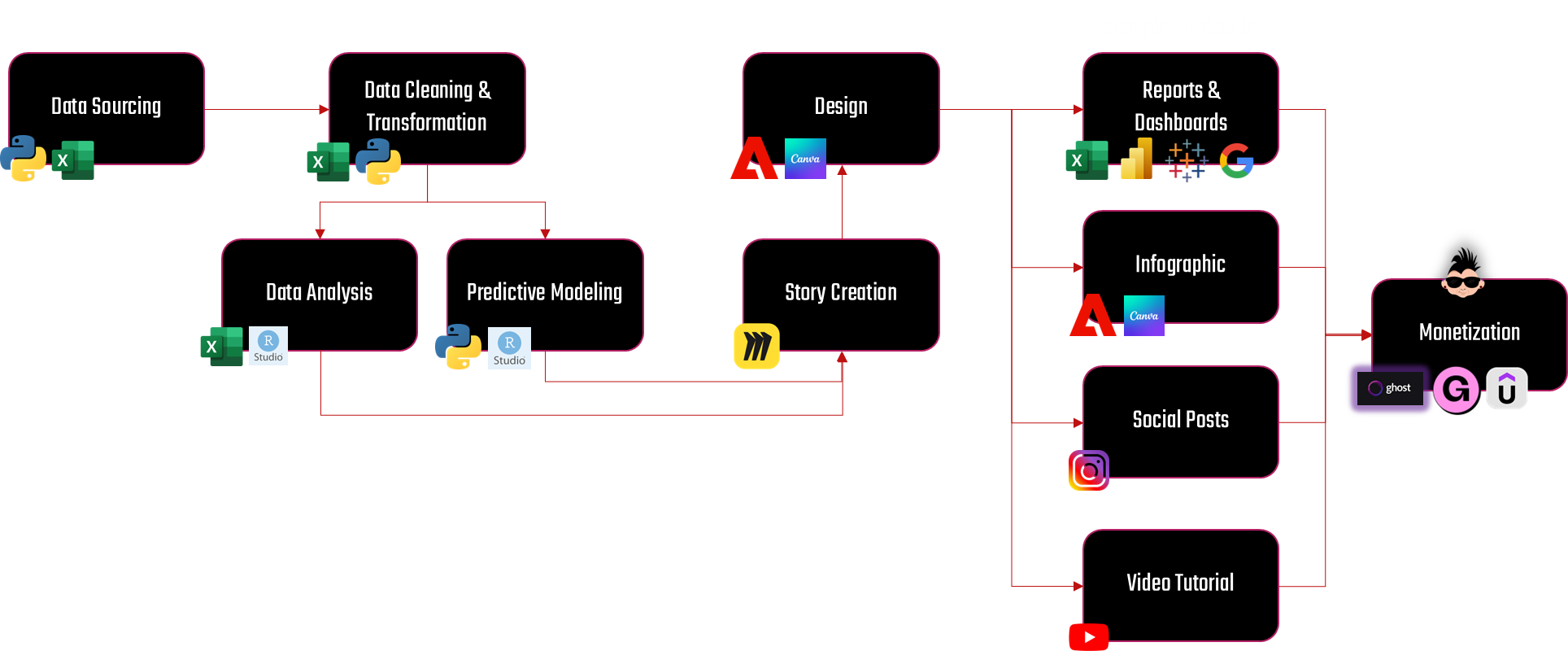
Whether you’re telling stories about the next best prospect, startup trends, or music charts, this framework helps you organize your efforts from data to monetization. It combines analytical rigor, creative storytelling, and targeted distribution to help you build content that not only resonates, but also engages and earns.
Want to learn how to analyze data and build amazing data stories? Join Data Punk Media today!
Breaking Down the Framework
Depending on the project, you may need to work through some or all of the components in the framework. For example, if you're building a short business documentary on market futures, you will likely leverage most of the framework; however, if you're creating a social post on Instagram that highlights the Win/Loss Ratio of two teams playing one another, you'll only need parts of the framework.
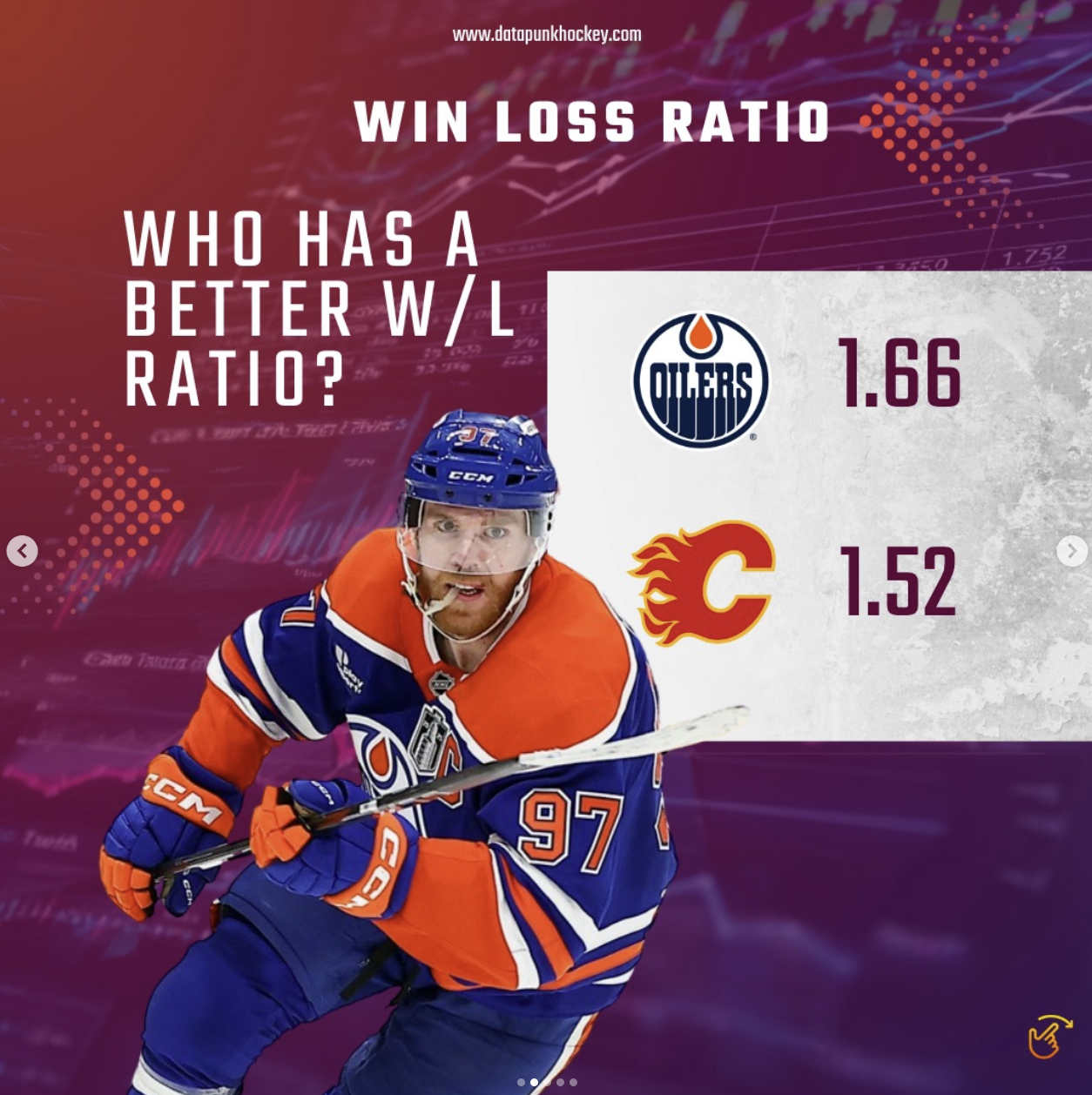
Either way, it's good to understand the full framework because you'll eventually find yourself working on projects of varying size and complexity – some of your own making and others from your customers.
Data Sourcing
Every good story begins with the hunt for the right data. This might be structured data (e.g., downloading spreadsheets) or unstructured data (e.g., harvesting comments from social media), but either way a good story requires a creator or journalist to explore the corners of the story with good data.
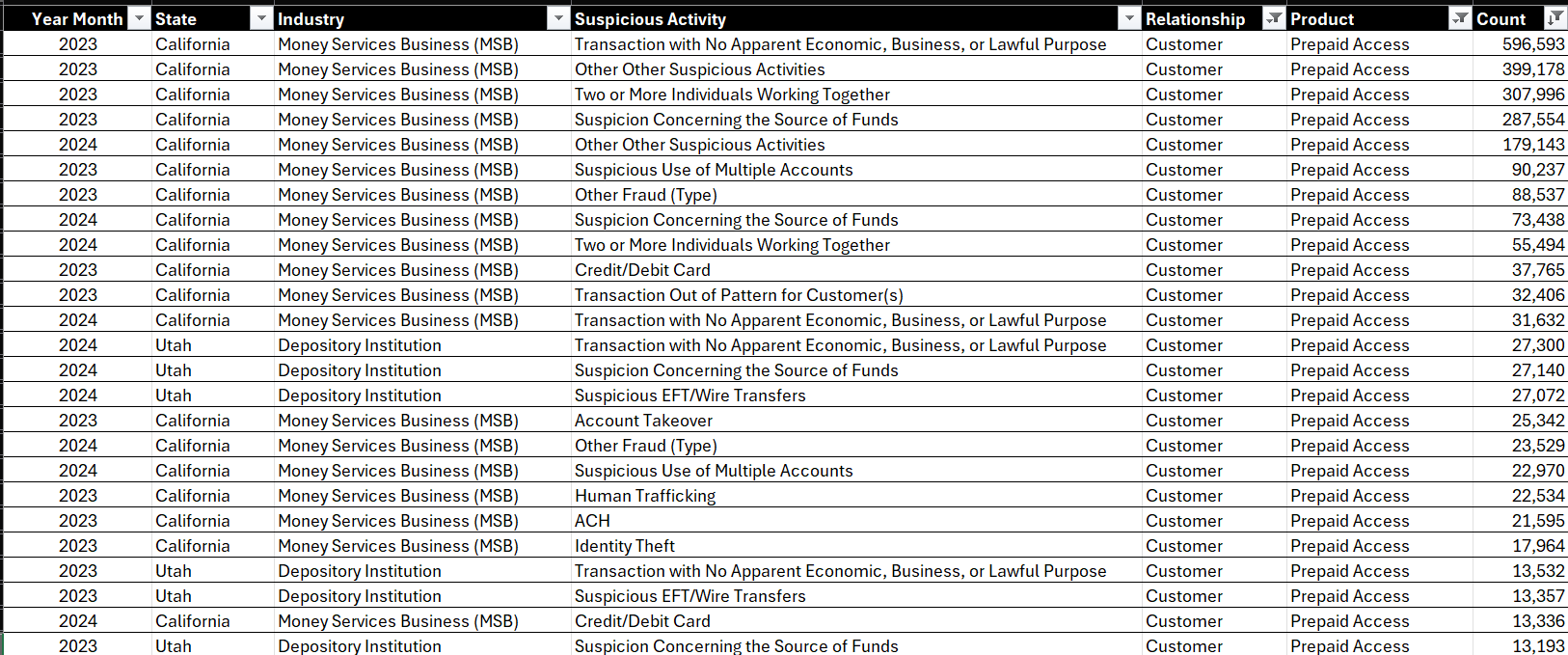
In sports, this might mean pulling data using the NHL API or Web scraping FB Reference. In business, maybe you’re scraping Crunchbase or World Bank indicators or using open data sources such as Data.GOV or Open Secrets. In entertainment, perhaps you’re using Spotify’s API to track how an artist’s popularity changes after a major event. The range of available data is amazingly broad across sports and business, but less so in entertainment. That said, the general process to get that data to a place where you can analyze it is similar across most data story projects.
At this stage in a project, the goal is not to overanalyze; it’s to explore. You'll want to ask yourself: What datasets help me understand this story? and What’s missing that I might have to create myself?
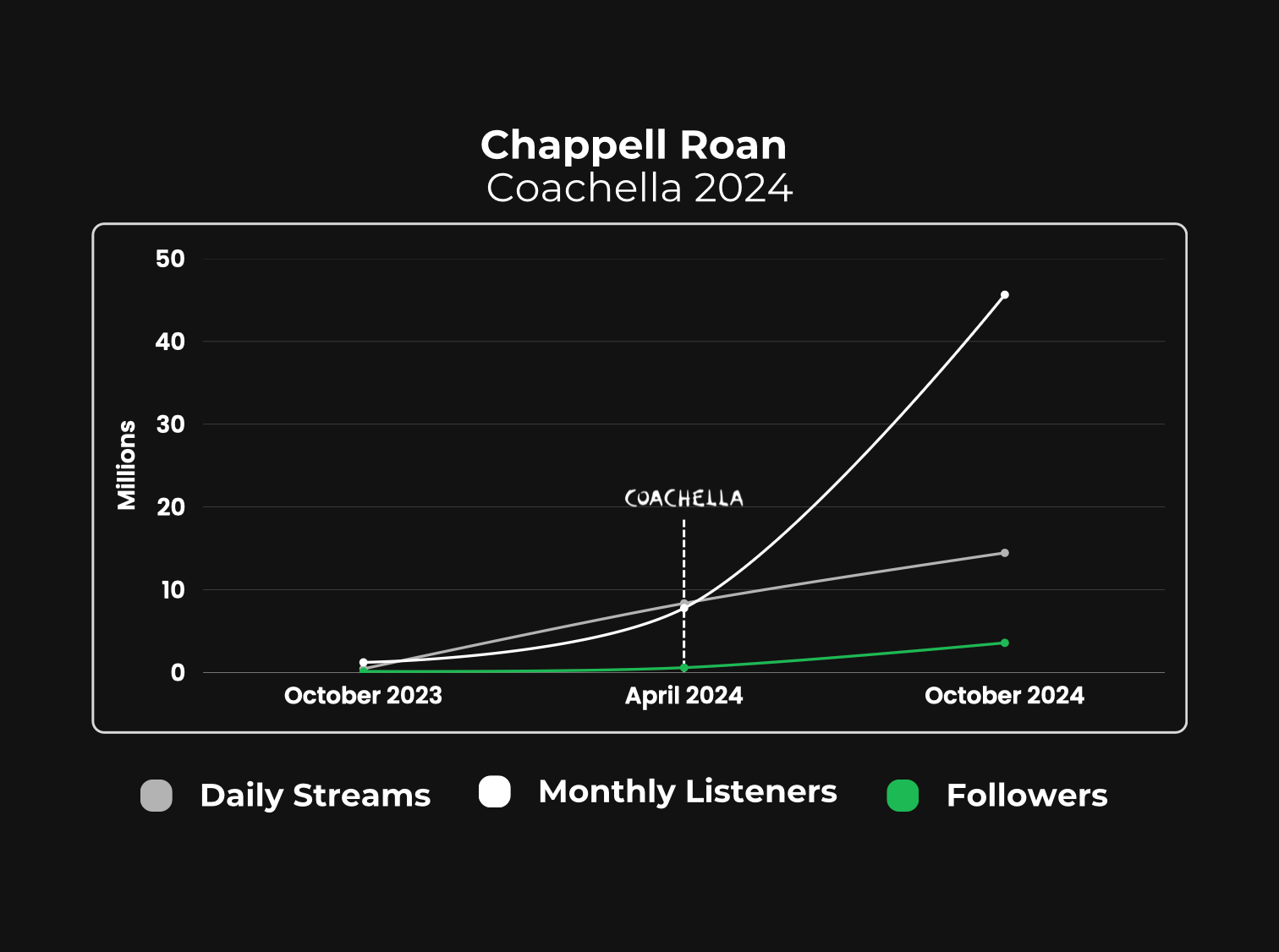
For example, in our story on The Coachella Effect, we took a "before and after" view to understand the impact of Coachella on artists. We looked at Spotify metrics before and after the festival to measure the impact on artist streams and followers.
Data Cleaning & Transformation
Raw data is messy. Cleaning is where you turn chaos into usable data. The tricky part here is understanding what clean data looks like and what additional, calculated variables you might need for your analysis and story. For example, here's a downloaded spreadsheet from Hockey Reference with areas of the dataset that need to be cleaned called out in red (e.g., extra header row, missing column headers, special characters, etc.). You could manually clean up this spreadsheet, or you can programmatically clean it up using Python or R.
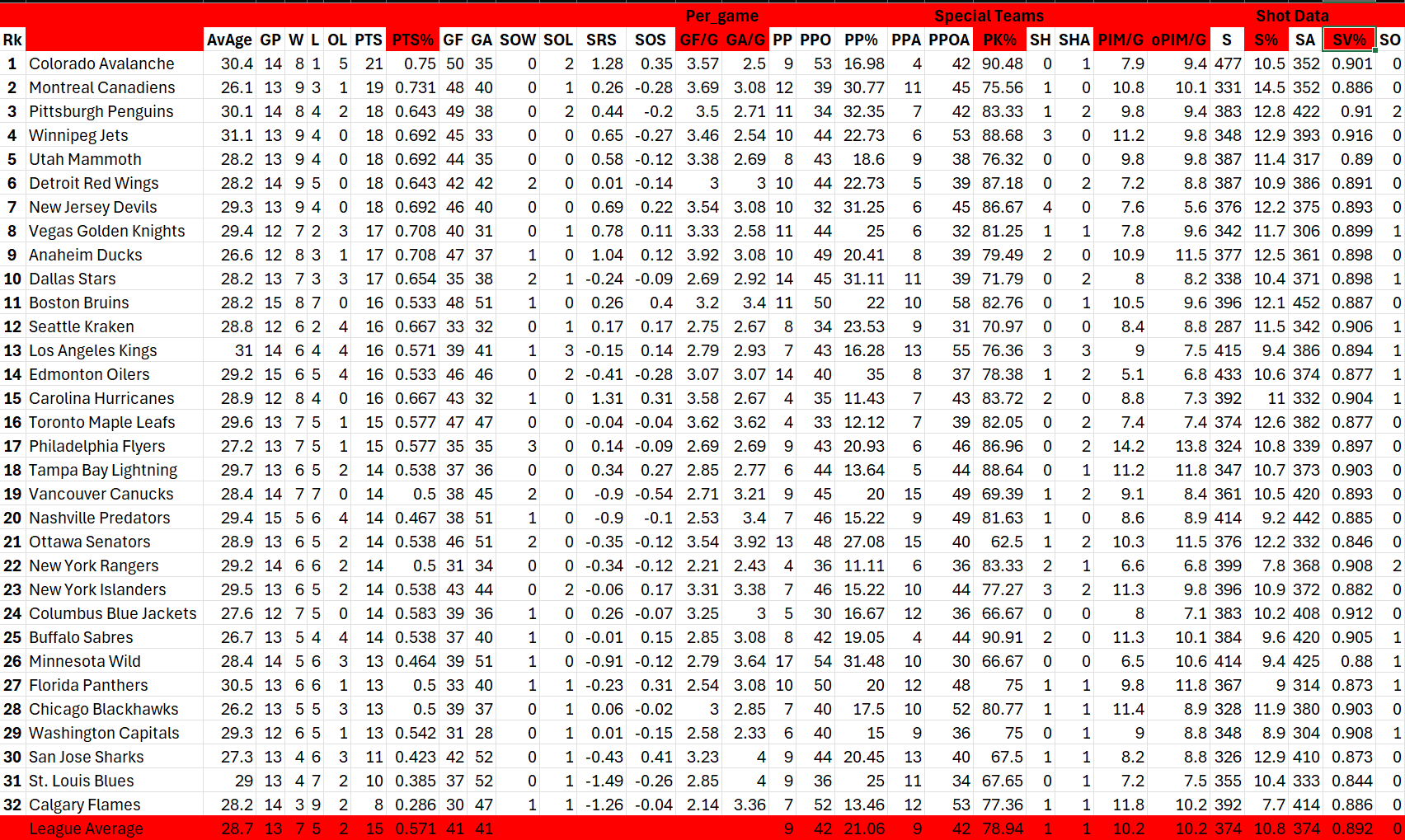
When cleaning your data, you may need to remove ancillary rows of data, handle missing values (referred to as 'imputing' values), fix the formatting, normalizing metrics, transforming fields, and so on. And again, depending on the type of project you're working on and the source of the data, the extent to which you need to clean and transform that data will vary. For example, a story that summarizes the top 10 teams within a league based on Total Points likely won't require a lot of data cleaning. Conversely, a story on predicting the outcome of the MLS Championship would require data cleaning, transformation, feature engineering, and so on.
Join Data Punk Media today and explore the different data stories we publish.
Data Analysis
After you have your data in a place where you can analyze it, the fun can now begin. Through your analysis, you'll find patterns, correlations, and anomalies that drive your narrative. Also, don't rush your analysis. The more you understand the data (and subject area) and the more you iterate on your analysis, the better your story will be.
When analyzing the data, use descriptive statistics, visualization tools, or platforms like Power BI or DataWrapper to surface insights. Also, be prepared to implement a design system that translates data and visualizations created in Excel, Python or R into an image that can be embedded and used within different modalities. This can be as simple as a copy and paste from Excel into PowerPoint or it can be more involved using Photoshop.

And remember, data analysis in storytelling isn’t about producing a 30-page report; it’s about finding a pattern that unlocks the narrative. For example, you might discover that NHL teams with higher Team Balance Index scores in hockey win more one-goal games—creating a perfect hook for a “How Balance Wins Championships” story.
Predictive Modeling
In our projects, we typically try to find a predictive element to the story. Predicting the future is difficult, but it adds character and depth to a story. However, to do this means you need historical data and tools, data science and programming knowledge to build the predictive models. Depending on what you're trying to do here, the hill to climb can be steep.
But simply put, a descriptive analysis, for example, explains the past and predictive modeling forecasts the future. Even simple models, such as regression, correlation analysis, moving averages, or Monte Carlo simulations, can create powerful storytelling angles.

Further, predictive modeling gives your story a what-if element. It transforms your work from descriptive to prescriptive, offering something your audience can’t easily Google. For example, use historical game data to build a model predicting which EPL strikers are most likely to score or predict how a startup’s funding round might impact its valuation six months later.
Story Creation
We have a ton of fun here as a team. We have a Miro board (and sometimes use Figma to make the transition to design more efficient) and meet regularly to talk through the storyline. And not every story is created equally; sometimes situations around an event – be it sports, business or entertainment – present the opportunity for stories. So, be flexible in where and how you source your story, let experts help drive the story and continue to iterate on your data analysis while brainstorming on your story.
Also, we've spent a lot of time around data and storytelling and we often see a hyper-focus on data analysis, but an under-focus on story development and creation. Data without a story is at best a report and at worst noise.
Allow the creator in you to take over here. Identify the characters, the conflict, and the insight. Decide what emotion you want the audience to feel, for example, surprise, curiosity, pride, or outrage. And if you have a small team, assign someone to be the lead storyteller. Splitting the team out into separate but connected disciplines will eventually bring your system to life through a creative assembly line.
A good story follows a classic structure: setup, discovery, and resolution. You start with a question, reveal a surprising finding, and end with a takeaway or prediction. However, try and follow some general rules of idea and character creation (e.g., use discomfort, empathy and conflict) together with plots and story arcs using your data to create an interesting throughline.
Content Design
The design of your content is where the story comes to life. This step turns your data story into a visual experience, for example, visualizations, videos, infographics, carousels, or dashboards. Whether you use Canva, Figma, Power BI, or After Effects, your goal is to make the insight instantly understandable.
We try and answer a few questions when thinking through design, such as:
- Who's the audience?
- What's the storyline?
- What's the modality?
For example, if you're a journalist and are writing a long-form article, then your structure and delivery will be likely combine text, images and interactive visualizations. You might use Medium, Ghost, Substack or another publishing platform (assuming you're an independent journalist/creator) and may use tools such as DataWrapper to integrate interactive visualizations.
We would recommend two approaches to content design.
The first is to have a general design system that gets you from data and story creation to a design for a specific modality. This might use a combination of Miro/Figma, branding and design guidance with templates. Building this into your process means you spend more time on bringing your story to life, rather than futzing about with creating new templates with each story.
The second is to have baseline templates for each of the modalities. For example, for social content, create a set of branded Canva templates; for videos have an After Effects template that you can use; and for articles have a standard approach with branded visualizations. Again, wherever you can optimize your time with standardized templates is time you get back to spend on your story.
Publish to Different Modalities
You’ve got the story. Now it’s time to distribute it. But there can be a lot of effort and time spent here if you're not careful and planful. For example, when we first started out we thought we needed to publish to every platform for maximum visibility. For us, that was wrong. We discovered that it's okay to choose a specific platform and focus on growing your audience on that platform.
Also, each platform has their own algorithmic considerations and nuances; these take time to understand and master. Furthermore, each platform has different content configuration guidelines, so not all content is created equally. You might need 16 x 9 on one platform and 4 x 4 on another.
Before you get too far into this stage, create a publishing strategy. For example, a "spray and pray" approach is not strategic. You'll likely get low engagement across all of the endpoints. However, if you develop a strategy that 1) targets specific platforms and 2) creates a virtuous cycle across those platforms (strategically), you'll likely have more initial success and will better understand how to implement content strategies.
An example strategy might be:
- Have a weekly newsletter on a publishing platform to bring your community rich content.
- Distill that weekly newsletter into smaller social posts that point back to the newsletter and other content you publish on your platform of choice.
- Attach a product and an offering that you promote through your content.
This is a very simple strategy that you can scale to other platforms (e.g., add a YouTube video that distills the newsletter into a 2-3 minute video), but gives you broad engagement with an audience, a core place to bring value (and digital products) to your community and creates a connected strategy from content to product.
And remember that each platform has its own storytelling language:
- Ghost Newsletter offer in-depth breakdowns and case studies.
- Instagram are about visual hooks and snackable insights.
- YouTube represent voice-over videos with animation.
- Medium or Substack are cross-posted thought leadership.
The trick is adapting the same story across platforms instead of reinventing it. Think of your core story as the “master script,” then version it for each medium.
Interested in data-backed stories? Check out all our series at Monthly Stories.
Monetize
If you're like us, we started out doing this in our day jobs and then spent time understanding the space and getting our processes and practices down before thinking about monetizing. We wanted to enjoy the story design process and not have the burden of trying to monetize it out of the gate. And each of you will follow a different path depending on your circumstances.
If you believe everything you see on social platforms, you might fall into the trap of believing that you can create a digital product one day and then sell it the next. Which of course you can do, but will that product sell? Who will buy it? Will you enjoy creating and scaling that product? A business that has substance, offensive and defensive strategy built in, and has a solid offering takes time. Your path is your choice; however, our path was to create a strategy that suited what we wanted and then build a consistent and gradual path towards it. If you're trying to build a business through your content, then your content is a core part of your product or offering.
This will take some patience. But, learn as you go. Pick up skills and understand where you can outsource versus do yourself to optimize your time. And be selective on your ramp (thus your time) and bias quick-twitch learning with immediate application, so what you learn can be used and applied quickly (and most importantly will stick).
We've chosen a path, which is working for us, but you may choose another way. For example, you may choose direct monetization (e.g., paid subscriptions, templates, code, etc.), indirect monetization (e.g., content as leads for consulting services) or community monetization (e.g., charge for shared learning, coaching, etc.).
Join Data Punk Media today and learn the different ways you can build predictive models for your next data story!
How the Framework Comes Together
This was a long post, so if you got this far thank you and congratulations. That said, we're going to continue to break the Storytelling Framework down in future newsletters so you get a deeper view on each component.
Before we close this edition out, though, let's walk through another example to help drive it home how the parts of the framework work together.
Sports Story: “Dark Horse Rising: Logan Stankoven”
Sports stories are interesting when you focus on the character and provide a surround of data. In this case, Logan Stankoven is a Canadian-born professional hockey player. He had an impressive run in the WHL and has had decent success in the NHL – see stats below.
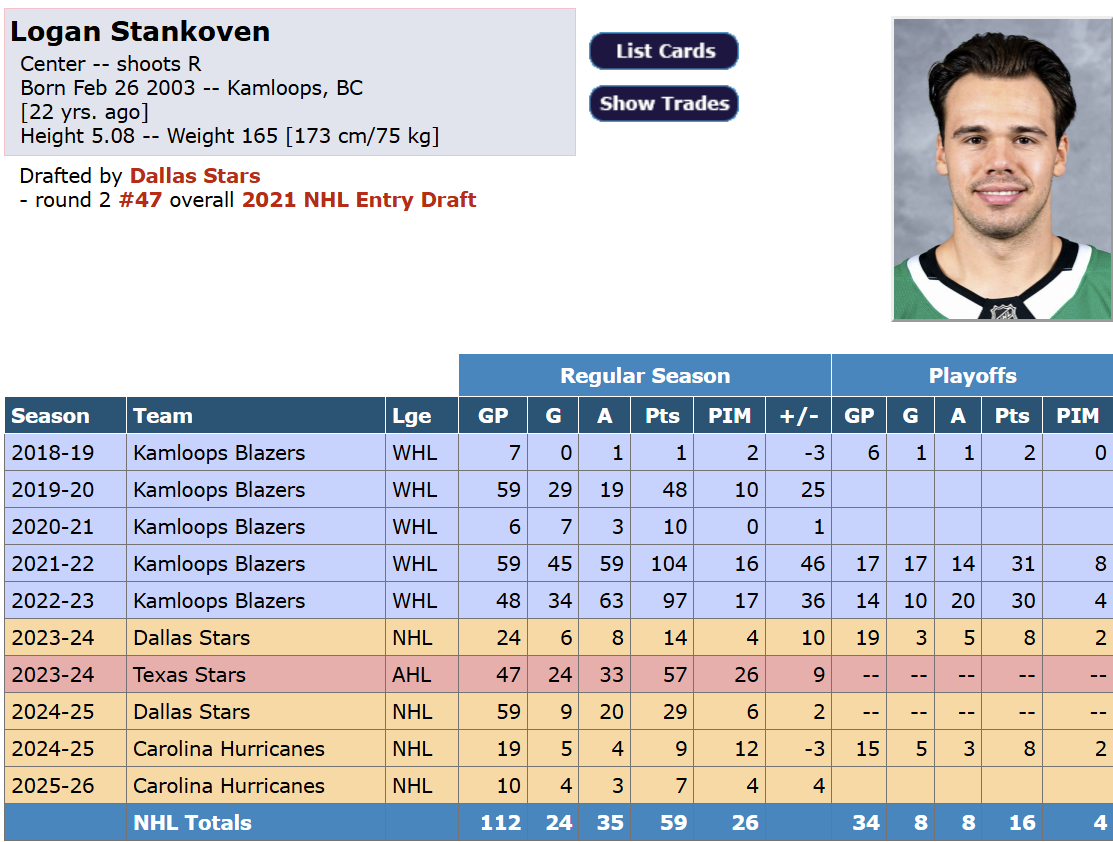
However, he's 5'8" and 165 pounds in a professional league where the average height is 6'0" and 190 pounds – and getting bigger every year. This means small players have to really bring it; they need to be scrappy, strong on their feet and not be afraid to mix it up in the corners. These are the ingredients for a story here with a plot of 'the quest' for Stankoven in the NHL.
So, how does the framework come into play?
With a story like this, we'd likely develop the character to start. Who is Logan? What obstacles has he overcome to get to the NHL? Does his style gel with the Hurricanes? And how are the Hurricanes poised this season?
We'd then do some data sourcing. We get his full minor league, AHL and NHL statistics. This would mean sourcing from three different data sources and then formatting the data such that it's in a consistent, standardized format. We'd also create a translation (e.g., using the NHLe metric) to get some symmetry across his statistics. For example, take his Goals per Game or Points per Game and have a standard view of that across his minor and major league career.
We'd then compare him to other prospects in his incoming year and evaluate him against other centers. We'd want to compare him against his own size and weight class and against those above his size and weight class. (Him playing above his size and weight class is a dimension of the story.) You could then forecast his goal and point production potential when centering specific lines on the Hurricanes – factoring into their overall success this season.
With all of the above, we would then be able to build the narrative around an underdog who is fighting against the odds to succeed in the NHL (and with a team that has a chance at winning the Stanley Cup this year). We would then translate this story into three modalities:
- Long-form article for Ghost
- YouTube Short
- Carousel for Instagram
- Several posts on Instagram to market the story
If you wanted to monetize this, you could build a Power BI template that analyzes centers in the NHL in a common way using their minor league and NHL stats and then compares their performance pre-NHL and in the NHL and offer it as a paid download.
Summary
The future of storytelling belongs to those who can bridge data and creativity. This article was long, but defined what the Storytelling Framework is and the components that comprise the framework. We also provided some examples along the way to better contextualize how you would put the framework into practice.
Note that this framework isn’t about becoming a data scientist—it’s about becoming a data-literate storyteller who knows how to find truth in numbers and express it in ways that move people. You absolutely do not have to be a data scientist to bring numbers into a story; though, you should have some basic data and statistical literacy.
The more you follow and leverage these steps in your data-driven storytelling, the more likely you’ll have a system that scales. A process that turns chaos into clarity. And most importantly: a framework that helps you grow your audience, influence, and income.
Now that you've got the basic framework under your belt, we're going to do a deep dive on each part of the Storytelling Framework – to make it more real through examples. We'll share tips, best practices and most importantly the mistakes we've made along the way and what we did to course correct.